
Just Try Stuff....
I was prompted by previous posts to dig a little deeper into one of the learnings from the pandemic.
“Just try stuff” was about recognising that a key characteristic of a complex situation like a pandemic is uncertainty about what to do, and about the only thing you can do is to try something and see what works.
We have seen that happening constantly through the last 18 months, both in responding to the health crisis, and also dealing with the social and economic consequences.
What has been interesting to me has been the shift from an initial belief that we knew what to do and could predict and plan actions, to a growing realisation in the value of trying a range of approaches, while keeping a close eye on the results, and then modifying quickly based on the results.
Now while it did seem a bit like they were “experimenting” on us, there is little doubt that keeping everyone as safe as they could while learning what worked has been a feature of the response worldwide.
And while our leaders have copped some criticism for their approaches- slow to respond, inconsistent, etc, perhaps they were being judged by conventional thinking that just doesn’t work when challenged by this level of unprecedented complexity.
The features I think we learned around action planning that we can take into our ongoing co-design activities include:
- feeling a bit uncertain is a characteristic of tackling complex situations
- it’s OK to be unsure what to try next
- letting go of the “right answer” is hard but appropriate
- multiple small and short “experiments” make much more sense when tackling complexity
- keeping the activities “safe to learn” is key to gaining support
- reviewing progress regularly against the goals provides confidence
- and not being afraid of ending something and trying something else based on the results
So while we still haven’t yet “solved” the pandemic, it has allowed our political, business, health and community leaders to see that “trying stuff” rather than always knowing what to do is a useful alternative approach in our complex and ever changing world.


Turn rejection into collaboration
I was reflecting on Stuart’s recent blog about how we tend to hold our “right” position and not look deeper, and it made me wonder about a situation I had recently with a client.
The client was frustrated by the reluctance of a group of engineers doing some cultural awareness training to help working with a group of indigenous stakeholders.
What I was hearing were comments like…
“I’m over their rejection of training”, “I can’t be bothered trying to help them? , “If they don’t want to learn, why should I worry?”
It felt to me like an example of ‘weaponizing’ rejection or disagreement, as one might do to make a difficult situation feel OK.
A bit like finding someone to blame- “I’ve done all I can, it’s up to them whether they sink or swim”
Now while it must feel very exasperating, it’s probably not very helpful in terms of getting the desired outcome of working well together.
I pondered what a different response might look like if I was in his shoes.
I could just ignore their supposed ignorance, but it might be more helpful (and probably more satisfying in the end) to seek to remove some of the barriers to their involvement.
So I had two thoughts:
- I might not be aware of what those barriers are, so I might first step back and check my assumptions which might include things like…
- maybe I don’t understand why they are not interested, so I just assume they don’t want to learn
- maybe I’m not communicating the value effectively, so they can’t see why to spend the time
- maybe their workload is such that such training cannot get sufficient priority
- and then I could act ‘as if’ they want to learn- based on my new understanding and appreciation- and create space for people to step into …
- seeking input from those involved on the best way for them to learn about the indigenous stakeholders
- rearranging workflows to allow space and time for learning
- listening to their perspectives on the topic and seeking their input on best ways forward
So while rejection is frustrating, it’s still an opportunity for collaboration.
When it comes to the jab, is there a vaccine against my own righteous certainty?
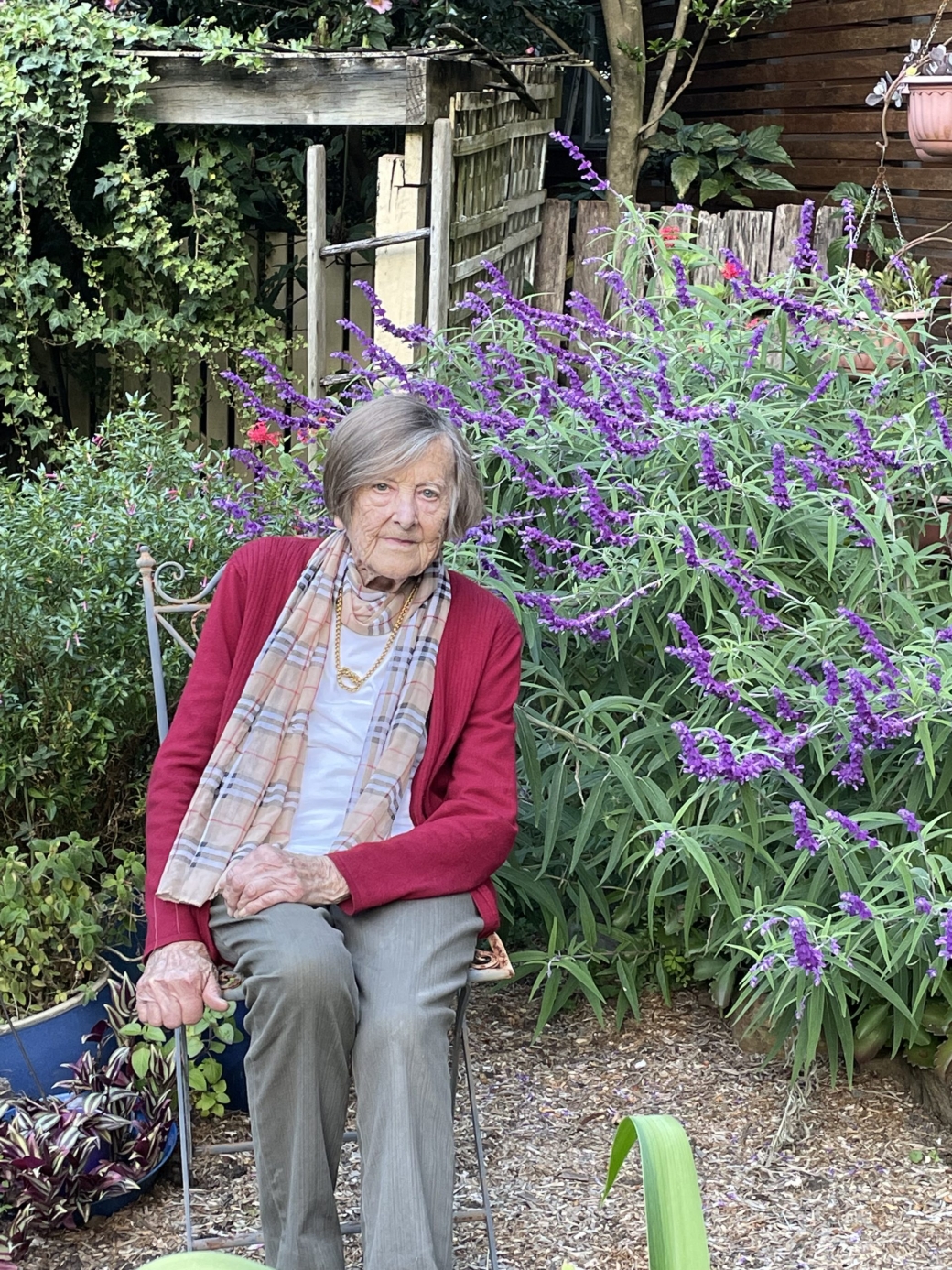
I have an aged neighbour – let’s call her Wendy – who lives alone, is fiercely independent and loves to garden. She is a smart and educated woman, deeply rational and with a curious mind. She’s amazing. But lately she’s been driving my family and I mad with her evasive reluctance to get vaccinated against COVID. When not gardening, Wendy watches the news channel obsessively so she knows which age cohort is most at risk of serious illness and death in this terrible pandemic.
My wife and I have been shaking our heads at each other in exasperation. “Why isn’t Wendy getting a jab? What is she thinking?” Sometimes even “How can she be so crazy?”
In other words we have been firmly mounted on our high horses, confident in our righteous indignation. Deeply embedded in our view that everyone should get vaccinated and that anyone who doesn’t is, let’s be honest, one card short of the full deck. It’s kind of nice to be so right.
And then I bumped into Wendy again the other day as she pulled great weeds, hoisted troublesome rocks and raked like a Dervish. I quickly mounted my horse again and pointedly asked “are you vaccinated yet Wendy?” As always she hummed and haahed, mumbled a few words and tried to change the subject.
I defaulted to lecture mode again, but this time something interrupted that automatic response. I stopped for a second and then asked “what is worrying you about the vaccines Wendy?” Strange that I hadn’t asked that before. Turns out that Wendy, like many an 87 year old, is on a daily regime of pills by the tub full. She’s been very worried that any new medication or drug, such as a vaccine, will adversely react with all the other drugs she’s on and something terrible will happen to her. Fundamentally she is scared of collapsing at home alone.
My bubble of righteous virtue burst and I landed with a guilty thump. I had never thought of that. Wendy’s reluctance suddenly made a lot of sense. I got it.
Turns out that putting aside my ‘position’ and being curious instead about Wendy’s experience made all the difference. When I chose to stop lecturing and to start listening I actually learned something that, not being frail and on multiple pills, I had zero insight into. And if this happens with my neighbour of 25 years, I shudder to think how often I’ve fallen into the same trap when working with stakeholders I barely know.
The lesson for me (again!) is that, even when I am feeling right, when my opinion seems self-evidently the correct one, I still have the choice to put my view aside and to be curious instead about how others see things. I was sort of outraged with Wendy’s position, but in choosing to ask rather than tell I gave us both options.
Having heard what was really troubling Wendy we were then able to have a constructive conversation about her worries and her needs. She gained some confidence. We organised a lift to the clinic. She got her first shot. Job done. Meanwhile I have re-learned that I can blame ‘them’ for their deficient ideas, or choose to be curious instead. Now to find a vaccine against my own righteous insensitivity!


When the Bark is worse than the bite
I currently have an issue at home with a neighbour’s barking dog. It is very annoying as it’s a large breed with a big deep bark, which carries across to our house frequently during the day and at night.
I was getting more and more annoyed and angry, but was reluctant to say anything because of my concern about the interaction with the neighbour. I was thinking that they might get angry or aggressive if I complained, they may retaliate in some way, they may think I’m being unfair as other dogs bark too.
I was fearful of having a hard conversation.
While I did have the option to complain to Council, deep down I knew that a better course of action was dealing directly, so I summoned the courage to visit the neighbour.
And my fears were unrealised. I found the interaction actually useful and pleasant. They explained the history of the barking, their work with Council, what they were doing at home to manage the dog, and asked for some help. While the dog still barks, we have created a window in the relationship for working together to get a result we can both live with.
So in this case, the bark was worse than the bite - my fear of the hard conversation was out of proportion with the reality, and the resulting discussion has helped to build an initial relationship to help us find solutions together.

Tackling the relationship “elephant”
One of the biggest challenges we see inside organisations when trying to work better together is the elephant in the room- the reluctance for staff to reveal how they feel about working with others.
We don’t want to hurt people’s feelings, and it can feel a bit unsafe to say what we mean.
While quite understandable, it can be a huge drag on the ability to work well together, as our behaviour is often driven by what we feel, but can’t really talk about.
For example, if we are thinking
- I’m not quite sure I can trust them with that information…
- They seem to be only concerned with the money….
- I feel they don’t value me and my team
- They see us as incompetent….
then we will quite likely act in ways that will drive dysfunction rather than co-operation or collaboration.
And our thinking and assumptions are not visible or able to be tested.
In our experience a can help people be a little more honest about how they feel about others, and provide a platform for improvement.
Asking the different workgroups to respond to a series of questions can help surface such thinking and provide a foundation for more authentic engagement and collaboration:
- How do we see ourselves? (our workgroup)
- How do we see the other group?
- How do we think the other group sees us?
Making the output visible by posting the results up can be quite powerful, as it can start to reveal some of the less obvious assumptions that are impacting how we work together.
Then discussing and exploring that together can help to tease out the relationship “elephant”, providing a platform for working better together.

More data doesn’t solve the trust problem
I have been working with a number of clients lately who are working in partnership with other organisations to deliver service or infrastructure outcomes. Sitting in on their meetings is illuminating and I have learnt a number of things.
Firstly, there are so many smart and capable people out there doing amazingly difficult jobs with commitment and competence. It’s humbling to see. Secondly, content experts find great comfort in talking about content. Gathering and analysing data, reviewing options and making decisions are mothers milk. And that’s as it should be for people whose job it is to deliver on challenging projects.
But there is a downside to this content competence, and it poses a critical risk when collaborating on complex problems. The downside of being a deep expert can be that if something doesn’t look like data or information about the project then:
- I may not recognise it as important;
- I may recognise it as important and then get stuck trying to gather data about something that defies a data-based approach;
- I may recognise it as important but ignore it in the hope it goes away.
The latter two are examples of retreating to the comfort zone of information and analysis.
An example would be when relationships and trust begin to break down on a project.
Sitting in on meetings recently with one project group I have seen the pressure mount on the team and relationships take a turn for the worse. Everyone sees it, and they definitely feel it. What is interesting is how they respond. For example, one project team says to the other “I want to know where you are getting those figures from, because they seem different to what we are getting?”. The response is often something like “we will get you the numbers…”.
The assumption seems to be that if we go back into the data and do more looking around and analysis we will find an answer that will satisfy you and we will all be happy. But of course what is really going on is an unspoken conversation about lack of trust. Team A is saying “we don’t believe your numbers and you can’t be trusted”. Team B is saying “we’ll get the data and show you so-and-so’s who can be trusted around here”.
The problem is clearly trust but the conversation is about the numbers: A classic retreat to the data. And of course, the longer the real conversation is avoided the harder it gets to have and the more damage done to relationships. The tendency to default to ‘safe’ arguments about data gets stronger, and around the vicious cycle we go.
In these situations, when at daggers drawn, what is most needed is some real listening, authentic curiosity and genuine vulnerability. We must talk to each other like people, with honesty and transparency.
These are hard conversations to have yet we all know that clearing the air and getting things on the table is a great way to bring people and teams closer together.
So, in your collaboration, are you always conversing about the data or are you building in the time for just talking, learning and sharing together? If you’d like some guidelines on how to do that feel free to download our tool, which offers a simple way to help go below the data.

Unlocking Co-design
On reading Stuart’s last blog about tapping into the three cornerstones to build collaborative capability, I recognised one way I saw this happen recently.
I had a coaching call with a client where they were complaining about a recent meeting where “hidden agendas” seemed to be constraining progress on a difficult co-design issue. The group consists of diverse external participants, each of whom passionately represents their constituency, and it some cases wear multiple hats, and so are no doubt juggling many perhaps conflicting points of view.
The client was seeking a tool that would help manage these people and their agendas.
We explored one of our meeting tools called “hold positions aside”- a way of helping groups to step past their strongly held views and consider new ideas.
As we explored and discussed using the tool, I was struck by the way the conversation and insights ranged across the three cornerstones:
- In discussing the context for using such a tool, the client realised that it prompted a new way of thinking (mindset) about the views of the passionate participants, seeing them less as “hidden agendas”, and more as a view that needed to be respected and heard.
- This also prompted some questioning as to whether the group might need to revisit where they were on the co-design journey (pathway), and potentially revisit their shared understanding the problem. And also whether the ‘agendas’ did reflect some reluctance to commit to working together, indicating perhaps that a review around the willingness might be useful.
- And in actually knowing about and using such a tool (skillset), the client highlighted key aspects that make a tool like this useable in their inexperienced hands:
- Simple step by step process
- Knowing where it fits
- Being able to “mix n match” the elements- to modify it to suit the users and the environment
- Building confidence to use it themselves
And so in this case the process of finding a simple tool to tackle a difficult argumentative group helped to unlock and integrate the three cornerstones of collaborative co-design capability- pathway, skillset and mindset.

Lessons from a newborn
Mindset is crucial for effective collaboration.
The clearest reminder for me about the importance of mindset was when our son was born (32 years ago!)
I guess my wife and I both thought at the time that the world would keep rolling along and we just had to fit the new arrival into our comfortable 'business as usual' existence (notwithstanding the advice from family and friends about the significant change we were about to experience!)
While we could learn the techniques of child rearing (nappy change, bottle feed, managing the crying, etc), a big surprise was how we had to adjust our thinking:
- No longer were we in control of our agenda- we had to adapt and be ready for what emerged in the night, or at mealtime, or when we were due to be somewhere!
- We no longer knew the answer (and sometimes even the question was unclear - babies aren't very clear sometimes in what they want!). So we had to become a lot more comfortable with uncertainty and not knowing but just trying stuff and seeing what worked (or not)
- Our schedule went out the window, we had to accept that flexibility and not certainty was the new order of the day.
- We could no longer do things 'to'...., it always had to be 'with'....the new arrival- as uncomfortable and frustrating as that sometimes was.
I learned to shift my mindset around some significant patterns of behavior, just as our experience at Twyfords tells us is necessary for collaborating effectively.
My key insight is that our natural and learned thinking that has worked and been successful in the past can compromise our efforts to collaborate.
We need to challenge and shift our thinking - to "rebirth" our mindset so that our collaborative efforts are congruent and effective.

Collaborators beware! There's a black hole out there
When I was young two sci-fi movies came out at around the same time. There was The Black Hole, apparently Disney’s first film with a PG rating. And then there was Alien. Not sure what it was rated but in terms of traumatic impact on my young mind it scored a clear 11 out of 10. I’m still getting over it.
I recall The Black Hole being a little underwhelming, but all these years later it’s the inescapable power of that thing at the centre of the galaxy and the centre of the plotline that I keep being reminded of in my work.
We all know that black holes exert an unfeasibly strong gravitational pull. Get too close and there is no escape, but even at a distance we can feel its presence. Any traveller in the vicinity has to constantly fight this invisible force lest they disappear forever.
Strangely, this has come to seem a lot like the universe my clients inhabit in the workplace. But in their case, the black hole is business as usual (BAU).
My work is all about supporting individuals and teams to grow their ‘collaborative muscles’; that is, their level of collaborative skill, behaviour and thinking. Inevitably for clients this means some change to the way they think about other team members, other business units, other stakeholders. Yet, the gravitational pull of business as usual is very strong, sometimes almost inescapable, making it really hard for people to grow a new, more collaborative pattern of thinking.
And just like gravity, the force that BAU exerts is invisible. It emanates through existing structures and processes, culture, performance evaluation frameworks, expectations of self and of others and in a 100 other ways. So when I work with clients I see people wanting to change their approach, to work more collaboratively, yet struggling to make progress against the black hole that traps their thinking into BAU. And if the thinking doesn’t change, neither can the actions.
Organisations that make the shift to a more collaborative way of working do so with more than just a few tools and a training program. Rather they do so by making new thinking possible. With the right support and freedom to learn, any person can escape the black hole of BAU. Let’s just hope they don’t encounter the Alien on the way past.

Collaboration- Assert and Love?
A client recently talked about the seeming ‘bi-polar’ nature of their organisation, where they see a strong desire for good relationships with their stakeholders, which can feel at odds with their role as a regulator and being strict on the rules, even when this damages relationships.
It reminded me of Adam Kahane’s book we discussed in our February blogs (“Collaborating with the Enemy”- Berret-Koehler, 2018)
As well as his simple framework around collaboration as a choice, Adam also suggests that being able to move between “asserting” (having the power), and “love” (building relationships) is actually a key if one chooses the multilateral approach.
This parallels our experience, where we often see people vacillating between wanting to drive in a particular direction, and waiting to build consensus together. They can be nervous about which path is “right”, rather than acknowledging that both might be appropriate and part of effective collaboration.
So when is "assert" and when is "love" appropriate? According to Kahane, asserting reflects the need for individuality, the importance of respecting that individual’s difference and their piece of the truth, and their need for control.
Love on the other hand respects the collective, and the fact that only by being together can we find the collective truth. It recognises that if the individual is not part of the collective problem, then they can’t be part of the collective solution.
If one seeks consensus too much, one might give up too much and let down their constituency.
If one asserts too much, one might damage the relationships and be unable to reach a required consensus.
So if we assume that “assert” and “love” need to exist in a symbiotic relationship for effective collaboration, what does that mean for the collaborator?
How do you manage that internal conflict?